Every guide below covers one kind of damage: what usually causes it, how we decide on the repair method, and what to photograph when you ask us for an estimate.
Not sure which guide fits? Start with the table, then open the page that matches what you see on your car.
Which repair does your damage need?
A dent, paint unbroken
Smooth, shallow dents away from panel edges are often candidates for paintless dent repair, where the metal is massaged back without new paint.
A dent with cracked paint
Once the paint is broken, the panel is straightened, prepped and refinished. Our dent and scratch guide explains the steps.
A scratch you can feel
If a fingernail catches in it, the scratch has gone below the clear coat and the area needs filling, color and clear rather than a polish.
Cracked plastic or a bent panel
Bumper covers and fenders are judged on whether they can be repaired well or should be replaced; see the bumper repair guide.
Guides by service
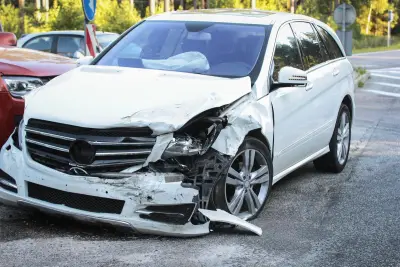 Collision RepairFender benders and moderate collision damage repaired, refinished and checked for fit.Learn more
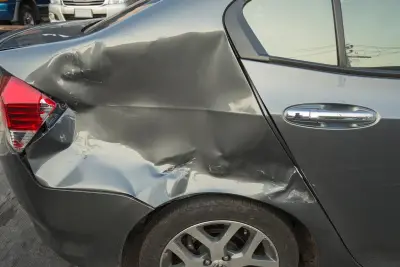 Dent & Scratch RepairDoor dings, creases, key scratches and scuffs repaired to suit the depth of the damage.Learn more
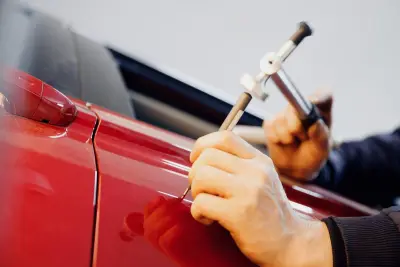 Paintless Dent RepairDents reshaped without sanding or repainting when the paint is intact and the area is reachable.Learn more
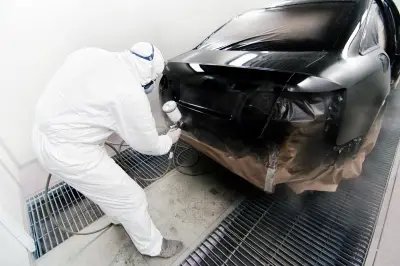 Paint & RefinishingColor-matched panel refinishing, blending, clear coat, full repaints and color changes.Learn more
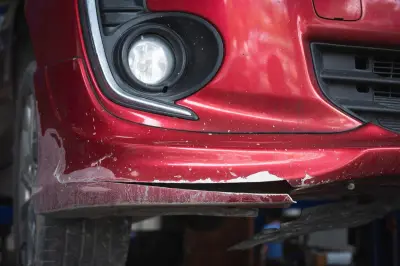 Bumper RepairScuffed, cracked, dented or torn plastic bumper covers repaired or replaced and refinished.Learn more
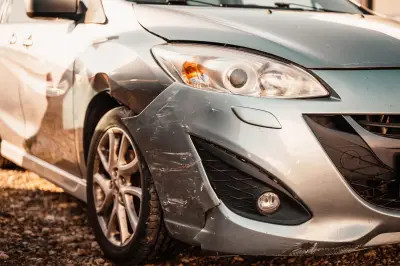 Fender RepairFender dents, creases and wheel-arch damage repaired, or a matched replacement panel fitted.Learn more
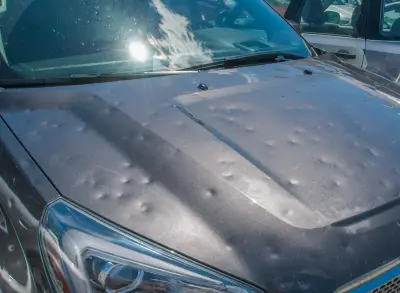 Hail Damage RepairHail dents on hoods, roofs and trunk lids repaired, mostly with paintless methods.Learn more
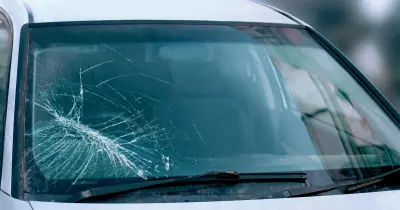 Windshield RepairRock chips and short windshield cracks filled with resin before they spread.Learn more
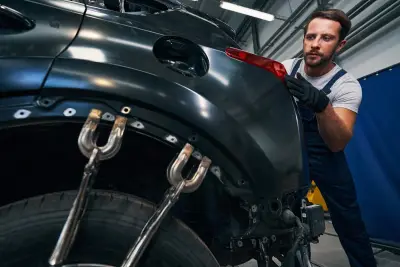 Frame & Unibody RepairFrame and unibody damage measured and straightened after a collision.Learn more
Before you send photos
- Wash off road dirt so the damage is easy to see.
- Shoot in daylight or open shade, not under a flash.
- Take one wide picture, one straight on and one along the panel at a low angle.
- Note anything that changed after the damage: a door that sticks, a light that stopped working.