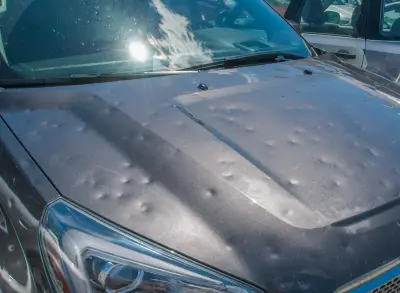
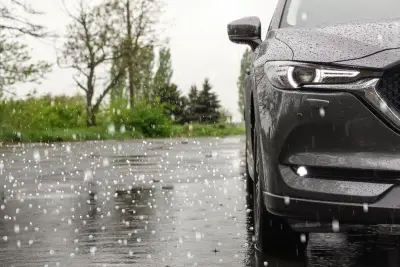
A few minutes of hail can leave dozens or hundreds of small, round dents across the top of a car. The horizontal panels, meaning the hood, roof and trunk lid, take most of it, with smaller dents along the upper edges of doors and fenders.
We repair hail damage on cars, trucks and SUVs in Nashville, using paintless dent repair for most dents and conventional repair where the hail broke the paint.
Why paintless repair suits most hail dents
Hail dents are usually shallow and rounded, and factory paint is flexible enough that it often survives intact. That makes them good candidates for paintless dent repair techniques: the dents are pushed out from under the panel and the original paint stays in place.
Access matters. On a roof, the headliner is lowered so tools can reach the underside. On hoods and trunk lids, tools go through openings in the inner bracing, and glue pulling handles the spots that cannot be reached.
Paintless repair
Used when the paint is unbroken, the dents are rounded and the panel can be reached from behind or glue-pulled.
Conventional repair
Used when large hail cracked or chipped the paint, left sharp dents on roof rails or body lines, or damaged a panel too heavily to bring back.
What to do after a hailstorm
- Photograph in daylight. Wait for daylight or an overcast sky. Shoot each panel at a low angle so the reflection shows the dents; straight-on photos in bright sun often hide them.
- Look for broken paint. Check dents up close for chips or cracks, which change the repair method and let moisture reach the metal.
- Check lights and trim. Note cracked lenses, mirror housings and broken trim pieces, which are usually replaced rather than repaired.
- Contact your insurer. Hail is typically handled under comprehensive coverage rather than collision coverage, if your policy includes it.
- Request an estimate. Share your photos and claim number, if you have one, so the damage can be documented panel by panel.
Insurance basics for hail
Policies differ, so read yours or ask your agent. In general, comprehensive coverage handles weather damage, the claim goes through your own insurer, and an adjuster inspects the car or reviews photos. You can request an estimate from us before or after filing. Keep your storm photos, since they help show what happened and when.
Send us your hail photos
Share photos of the hail damage taken at an angle in daylight, including the roof if you can photograph it safely.
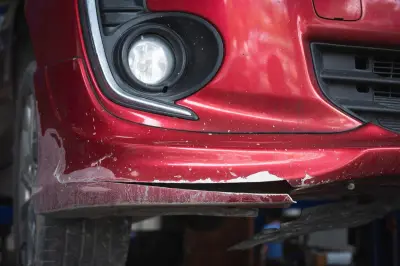
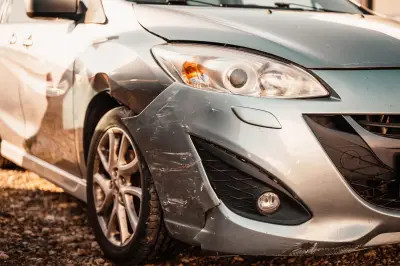
If several dents have chipped paint, our page on dent and scratch repair options explains how those spots are handled.
Related services
Articles on this topic
Frequently asked questions
Can all hail dents be fixed without painting?
Many can, but not all. Dents with cracked or chipped paint, very sharp dents from large hail and dents on roof rails or panel edges usually need conventional repair and refinishing.
Why can't I see the hail dents in my photos?
Direct sun and straight-on shots flatten the reflection. Photograph at a low angle along the panel in open shade or overcast light, so the dents show up as ripples in the reflection.
Does car insurance cover hail damage?
Usually only if you carry comprehensive coverage, which typically handles weather events. Your deductible applies, and your insurer can confirm exactly what your policy includes.
Should I wait to repair hail damage?
If the paint is unbroken, the dents are cosmetic and will not get worse on their own. If any paint is chipped, sooner is better so bare metal does not start to rust.
Will the headliner be lowered for roof hail?
Often, yes. Lowering the headliner gives PDR tools access to the underside of the roof, and it is reinstalled once the dents are out.